

12 Baby Footprint Ideas for Safe, Meaningful Keepsakes
A baby's footprint is useful precisely because it is so simple. It records a real size on a real day, and years later that tiny shape can bring back the whole stage: curled toes, sleepy stretches, and the surprising work of getting one clear print.
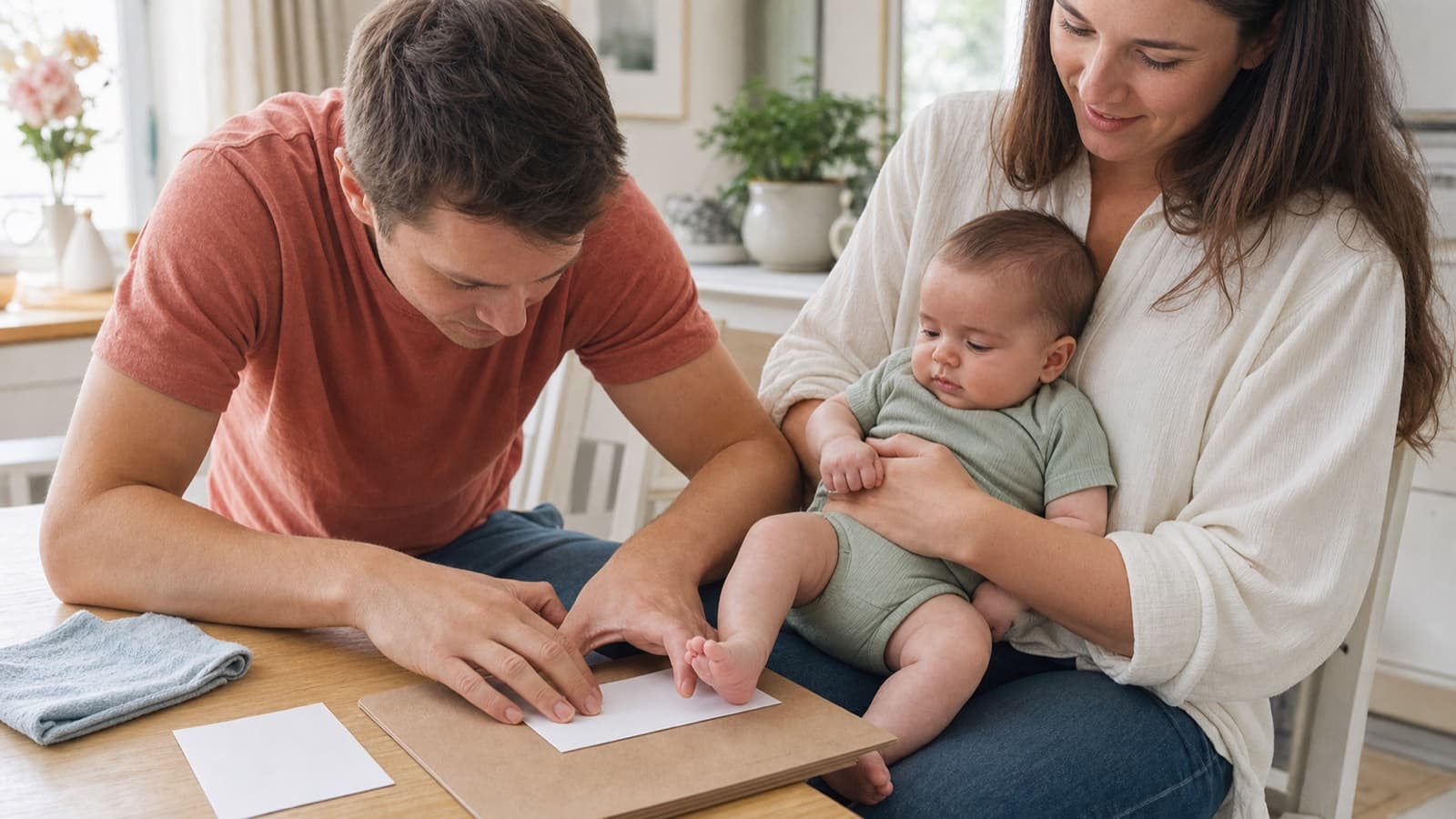
The best footprint keepsake does not need an elaborate craft setup. It needs a baby-safe method, one prepared adult, another pair of hands if available, and a plan that can be abandoned the moment the baby has had enough.
This guide includes twelve footprint ideas for infants, from nearly mess-free inkless prints to clay impressions and digital memory-book pages. It also explains which materials to avoid and how to preserve the story behind the print.
Start With a Baby-Safe Footprint Method
For most families, these are the easiest options:
| Method | Best for | Main advantage | What to check |
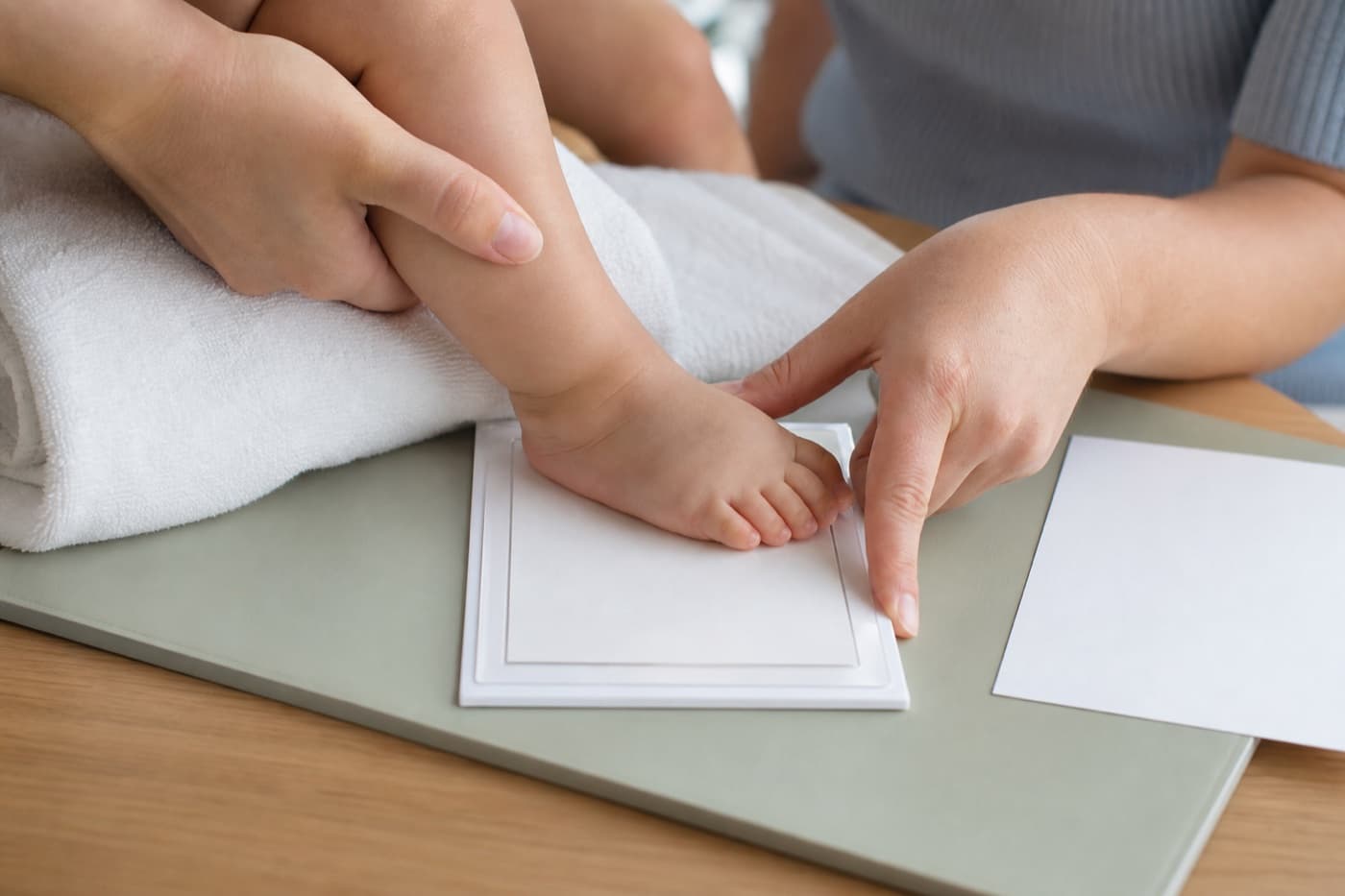
| Inkless transfer kit | Newborns and quick prints | Little or no visible ink on skin | Designed for infant hand or footprints; follow the kit instructions |
| Baby-safe washable ink pad | Clear paper prints | Strong detail and easy duplication | Label explicitly allows skin contact; wash off promptly |
| Soft impression clay kit | A three-dimensional keepsake | Captures size and toe shape | Product is intended for infant impressions; foot is pressed in and removed immediately |
| Photograph of an existing hospital print | Preserving what you already have | No need to repeat the print | Photograph or scan at good resolution and keep the original safely stored |
Poison Control's art-product guidance recommends reading labels, following instructions, washing skin and the work area, and never using a product for skin painting unless its label says it is safe for that use. "Non-toxic" does not automatically mean "made for a baby's skin."
Do not pour plaster of Paris around a baby's foot or hand. Plaster heats as it sets, and the U.S. Consumer Product Safety Commission's art and craft safety guide warns that casting body parts can cause thermal burns. If you want a plaster-style result, make the baby's impression in a purpose-made mold material first, remove the foot completely, and cast the plaster separately according to the kit directions.
A Calm Setup for a Clearer Print
Prepare everything before bringing the baby into position:
- Footprint paper or impression material
- A firm board or book beneath paper
- A damp cloth and warm water for cleanup
- A dry towel
- A spare sheet for a second attempt
- A pen for the name and date
- A phone or camera to photograph the process
If two adults are available, one can hold and comfort the baby while the other guides the foot. If you are alone, choose an inkless kit and work while the baby is calmly reclined in a safe, supported position. Never rely on an infant to stand for a footprint.
For a paper print:
- Support the ankle without squeezing.
- Relax the toes with a gentle stroke along the sole.
- Lower the heel first, then the outside edge, ball of the foot, and toes.
- Press once, evenly, without rocking back and forth.
- Lift straight up.
- Stop if the baby pulls away or becomes upset.
One imperfect print is often more charming than five stressful attempts.
1. Make a Simple Name-and-Date Print
The classic version lasts because it needs very little decoration.
Use good paper and add:
- Baby's name
- Date
- Age, such as
12 days oldor6 months - Length or weight, if you want it recorded
- One sentence about the day
Try writing something more specific than "tiny toes." For example: "You stretched this foot out of every blanket" or "Your toes curled every time the cold wipe touched them."
2. Create a Newborn-and-One-Year Pair
Make one print during the newborn stage and another near the first birthday. Mount them side by side at their true size.
Keep the setup consistent:
- Same paper dimensions
- Same ink color
- Same foot, if possible
- Name and exact date beneath each print
The comparison needs no ruler. The growth is visible immediately.
If you missed the newborn print, use the hospital print or begin today. A six-month-and-one-year pair is still a meaningful record.
3. Make a Clay Footprint Impression
Use an impression kit made for babies rather than household modeling compounds or direct plaster casting.
Roll or smooth the material before involving the baby. Press the foot briefly into the soft surface, lift it away, and let the impression dry somewhere completely out of reach.
Add the date on the back or on a separate label rather than trying to carve many details around the print. The negative space and little toe marks are the point.
4. Turn a Footprint Into a Family Tree
Place the baby's footprint at the base or center of a simple family-tree page, then add names or fingerprints from parents, siblings, grandparents, donors, godparents, or chosen family.
There is no required family structure. The page can show the people who belong in this child's story rather than forcing everyone into a traditional diagram.
For privacy, keep full names and birth details off artwork intended for public display or social media.
5. Make a Footprint Card for Someone Far Away
A footprint can become a card for a grandparent or relative who cannot visit often.
Use the original print for your own archive and send a high-quality copy. Add a short update:
This is the foot currently kicking through every nappy change. At four months, Maya loves the kitchen window, squeals at her brother, and refuses to nap when Grandma calls.
The description turns a cute card into a memory of a particular age.
6. Create a Seasonal Ornament Without Reprinting the Foot
Make one clean footprint, scan or photograph it, and reuse the digital copy for a holiday ornament. This avoids repeating a skin-contact craft for every gift.
You can print the footprint onto:
- Heavy paper inside a small frame
- Shrink-film made for home printers, used according to its instructions
- A paper insert for a clear ornament
- A wooden ornament through a professional printing service
Include the year and age. Keep ribbons, hooks, beads, and small ornament pieces out of the baby's reach.
7. Pair a Footprint With a Parent or Sibling Print
Place the baby's print inside or beside an adult handprint, parent footprint, or older sibling footprint.
This works well for:
- A solo parent and child
- Two parents and baby
- Siblings
- Grandparent and grandchild
- Donor-conceived family storytelling
- Chosen family
Label who is who. The relationship will matter more than a perfectly symmetrical arrangement.
8. Add the Print to a Baby Milestone Photo
Photograph the finished footprint beside the baby, not loose craft materials beside the baby.
Use:
- A framed print standing safely out of reach
- A flat card held by an adult
- A clay impression placed on a nearby shelf
- A print added later as an inset in the book layout
Combine it with a monthly portrait or one of these baby milestone card ideas. The footprint shows scale while the portrait preserves expression and personality.
9. Make a Footprint Flower or Animal From a Copy
If you enjoy footprint art, preserve the original print first. Decorate a photocopy or digital print instead.
A footprint can become:
- Flower petals
- A butterfly wing
- A small bird body
- A leaf
- A sailboat
- A simple heart made from two mirrored prints
Keeping the untouched original means the true shape remains available even if the craft experiment takes an unexpected artistic turn.
10. Build a First-Year Footprint Timeline
You do not need a print every month. Three well-spaced prints are enough to show remarkable change:
- Newborn or earliest available print
- Around six months
- Around the first birthday
Under each, add one line about how the feet were being used at that stage: tucked under the body, splashing in the bath, pushing during tummy time, standing with support, or carrying the child toward a favorite person.
Keep developmental descriptions observational. A memory book records your child's story; it is not a developmental assessment.
11. Preserve a Hospital Footprint Digitally
If you already have a hospital footprint, you may not need to make another.
Photograph or scan it in even light:
- Place it flat without removing attached labels
- Capture the entire page and a close detail
- Keep colors natural
- Save the highest-resolution copy
- Record where the original is stored
- Add the birth or arrival story separately
The U.S. National Archives recommends preventing damage and digitizing family papers and photographs as part of preserving them for the next generation.
12. Make a Footprint Memory-Book Page
The strongest footprint page includes more than the print.
Use this simple layout:
| Page element | What to include |
| Footprint | Original scan or clear photograph |
| Portrait | One image from the same stage |
| Scale | Age and date |
| Story | Two or three specific sentences |
| Family context | Who helped make it and where |
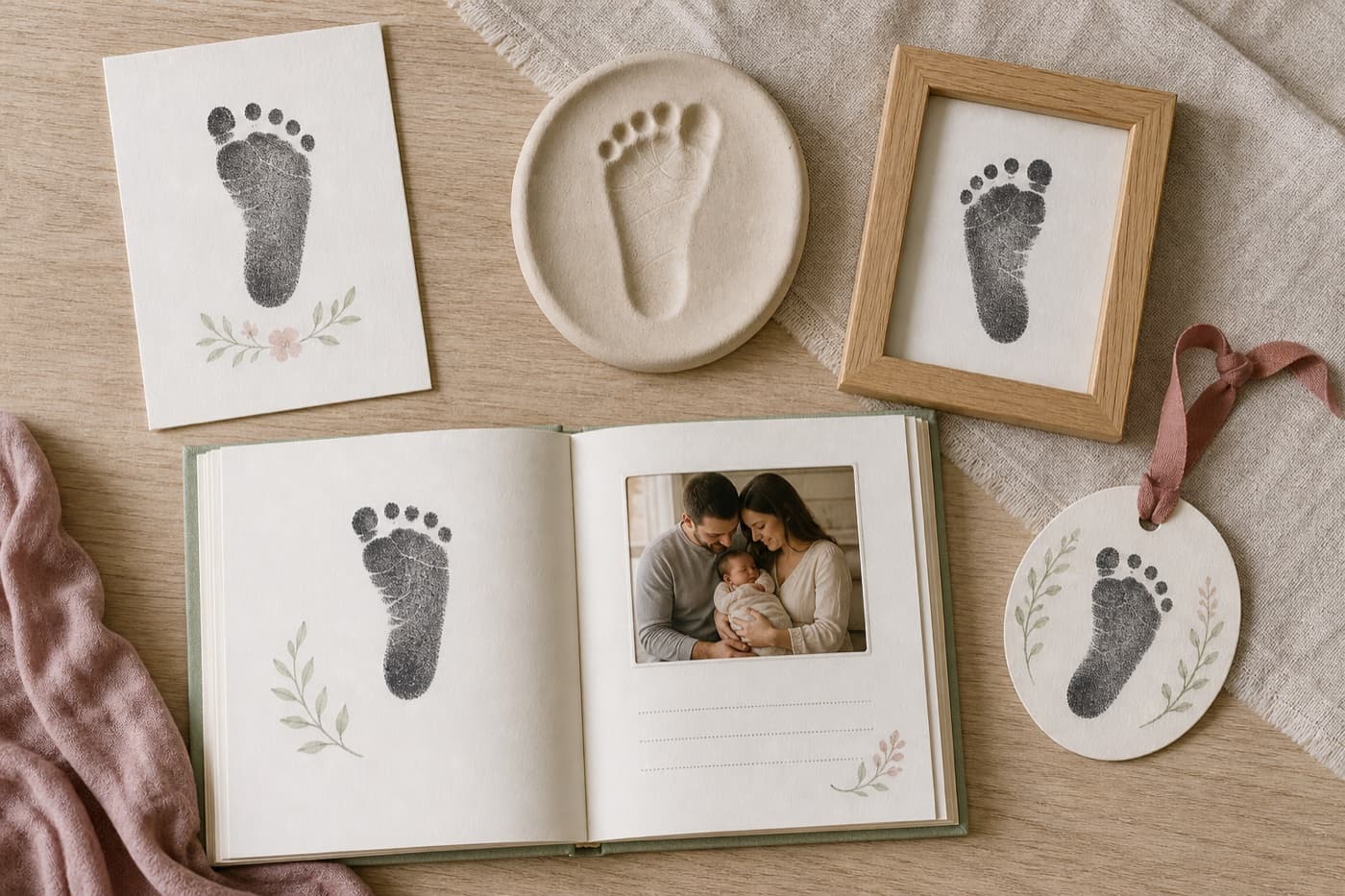
In Magic Baby Books, you can save hand and footprint memories in the child's private timeline with the date, photos, and the story behind them. You can share the moment with invited family, or keep it private. Later, select it alongside other timeline moments for a print-ready keepsake book or PDF.
Mobile and web have the same core functionality, so the whole process can be completed on either. A larger screen is simply optional when scanning, reviewing, or arranging several keepsake pages feels easier there.
How to Store the Finished Keepsake
For paper prints:
- Let the print dry completely
- Write identifying details in a separate margin or on the back
- Use an archival-quality sleeve or folder
- Store it flat in a dry, stable place away from direct sunlight
- Keep a high-resolution digital copy in a second location
For clay impressions:
- Let the piece cure fully according to its instructions
- Keep it away from moisture and impact
- Photograph the front, back, and label
- Do not leave it where a child can reach broken pieces
For digital copies, use the same basic system as the rest of your baby photos: a reliable backup, a meaningful filename or date, and a saved story. This baby-photo organization workflow can help if the camera roll is already crowded.
Frequently Asked Questions
What is the safest way to make a newborn footprint?
An inkless transfer kit designed for infant hand and footprints is usually the simplest low-mess option. Follow the product instructions, support the baby securely, and stop if the baby becomes uncomfortable.
Can I use ordinary acrylic or craft paint on a baby's foot?
Do not use a generic art product on infant skin simply because it says "non-toxic." Use only a product whose label explicitly permits that type of skin contact, follow its instructions, keep it away from the mouth and eyes, and wash it off promptly.
Can I cast my baby's foot in plaster of Paris?
Do not place a baby's foot directly into setting plaster or pour plaster around it. Plaster produces heat while setting and body-part casting can cause burns. Use a purpose-made infant impression kit where the foot is removed before any separate casting stage.
How do I get a clear footprint when my baby curls their toes?
Wait for a calm moment, support the ankle, gently stroke the sole to relax the toes, and lower the heel before the toes. An imperfect print still records the real size and may show more personality than a flawless one.
What should I write beside a baby footprint?
Add the name, date, age, and one observed detail from that stage. A short sentence about bath splashes, blanket kicks, tiny socks, or the person who helped make the print will be more evocative than a generic caption.
How can I preserve a footprint if I only have one copy?
Scan or photograph it before decorating, framing, cutting, or mailing anything. Keep the original flat and protected, and save the digital copy in more than one place.
Keep the Print, Then Keep the Moment
A footprint records size. The note beside it records life.
Choose a safe method, make one or two attempts, and stop before the activity becomes stressful. Then add the date, the people who were there, and one small detail about the baby attached to those feet.
That is what turns a mark on paper into part of a childhood story.