

Baby Milestone Cards: What to Photograph and Write
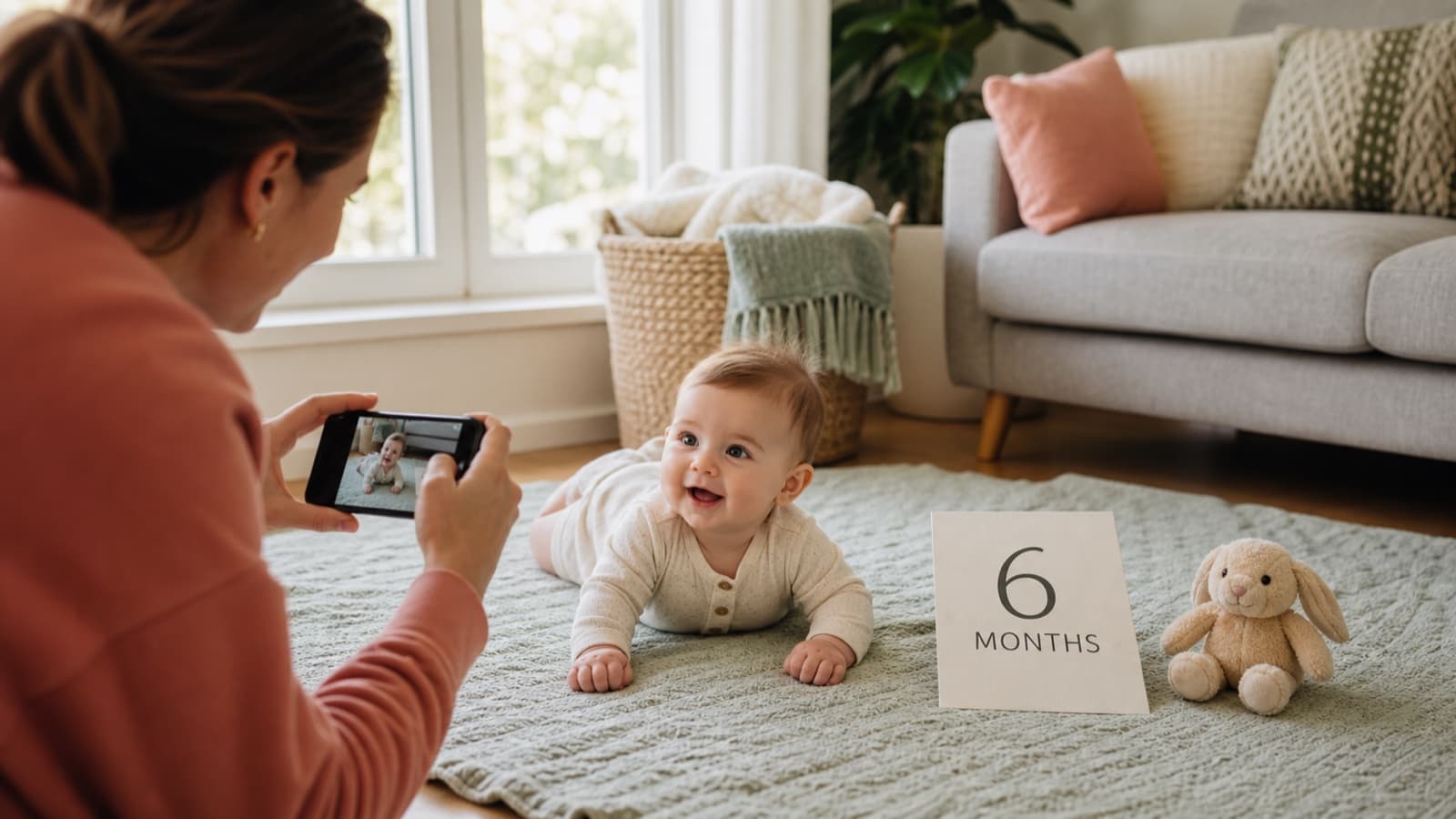
Baby milestone cards look simple: place a card beside your baby, take a picture, and repeat next month. The tricky part is remembering on the right day, finding good light, persuading a moving baby to stay near the card, and doing something useful with the photo afterward.
The good news is that milestone photos do not need to form a perfect twelve-picture grid. The card is only a label. The real memory is your baby at that stage: the expression they made, the toy they loved, the way they moved, and the small story you save with the image.
This guide covers:
- Which baby milestone cards are genuinely useful
- What to photograph each month
- Which firsts are worth capturing
- What to write alongside the picture
- How to take a good photo in five minutes
- What to do when you miss a month
- How to turn milestone photos into a private timeline and keepsake book
Use the parts that fit your family and skip the rest. A milestone system should make remembering easier, not give a tired parent another deadline.
What Are Baby Milestone Cards?
Baby milestone cards are physical or digital markers placed in or added to a photo to show a baby's age, an important first, or a family moment.
Most sets contain two kinds of cards:
| Card type | Examples | Best use |
| Monthly age cards | One month, six months, one year | Showing growth over time |
| First-moment cards | First smile, first tooth, first steps | Labeling a particular memory |
| Everyday cards | Slept through the night, favorite food, first holiday | Recording family-specific moments |
| Blank cards | A custom date, phrase, or funny first | Making the set fit your child |
Some parents use printed cardstock, wooden discs, fabric markers, or a letterboard. Others add a digital label after taking the photo. None is inherently more meaningful. The best option is the one you can find and use when the moment arrives.
Choose Cards That Are Easy to Use, Not Only Pretty
A beautiful set that is difficult to read or hidden in a cupboard will not help much. Before buying or printing milestone cards, look for these practical details.
Clear, Large Type
The words or number should still be readable when the photo is viewed on a phone or printed in a book. High contrast and a simple font usually photograph better than pale script.
A Matte Surface
Glossy cards can reflect windows and lamps. Matte cardstock or a low-sheen wooden disc is easier to photograph in natural light.
A Useful Size
The marker should be visible without covering your baby. Around postcard size works for many floor photos; a larger disc may work better when your baby is sitting or standing farther from the camera.
Cards That Fit Your Family
Look through every phrase before choosing a set. You may want cards for adoption day, donor siblings, two mums, two dads, a solo parent, chosen family, religious celebrations, or traditions specific to your home. Blank cards are valuable because no printed set can predict every family story.
Simple Storage
Keep the cards in order in an envelope, small box, or binder pocket near the place where you usually take photos. Write the actual date on the back after each use. That small habit turns the card itself into a keepsake and makes it easier to match with the correct photo later.
A Month-by-Month Baby Milestone Photo Plan
You can use the same background every month for a clear growth comparison, but change one small detail to show your baby's current personality. The suggestions below are photo prompts, not a schedule of skills every baby should have reached.
| Age | Simple photo idea | One detail to write down |
| Newborn | Curled up safely on a plain blanket with a birth or “hello world” card | Birth date, time, length, weight, and how the first day felt |
| 1 month | Face, hands, and feet in soft window light | What soothed them or the sound they made most |
| 2 months | Looking toward a familiar person beside the camera | What reliably caught their attention |
| 3 months | Floor play or tummy time, if comfortable | A favorite song, voice, or daily routine |
| 4 months | Reaching toward a familiar toy | What made them smile this month |
| 5 months | Toes, hands, and a close portrait | A new expression or little habit |
| 6 months | Their current way of sitting, rolling, or playing | Favorite game, food experience, or family joke |
| 7 months | Playing on the floor with a familiar object | What they wanted to touch or explore |
| 8 months | A candid photo of how they moved around | The place in the home they liked best |
| 9 months | A set of different facial expressions | A sound, gesture, or nickname from this stage |
| 10 months | Holding a safe favorite object | What they chose over all their actual toys |
| 11 months | Their current way of moving or standing with support | Something they were determined to do |
| 12 months | A relaxed portrait plus a wider family photo | Favorite food, word, game, and what the year felt like |
If a prompt does not fit your child, replace it. Photograph the stage they are actually in rather than trying to make the picture match a card.
The Value of Using the Same Setup
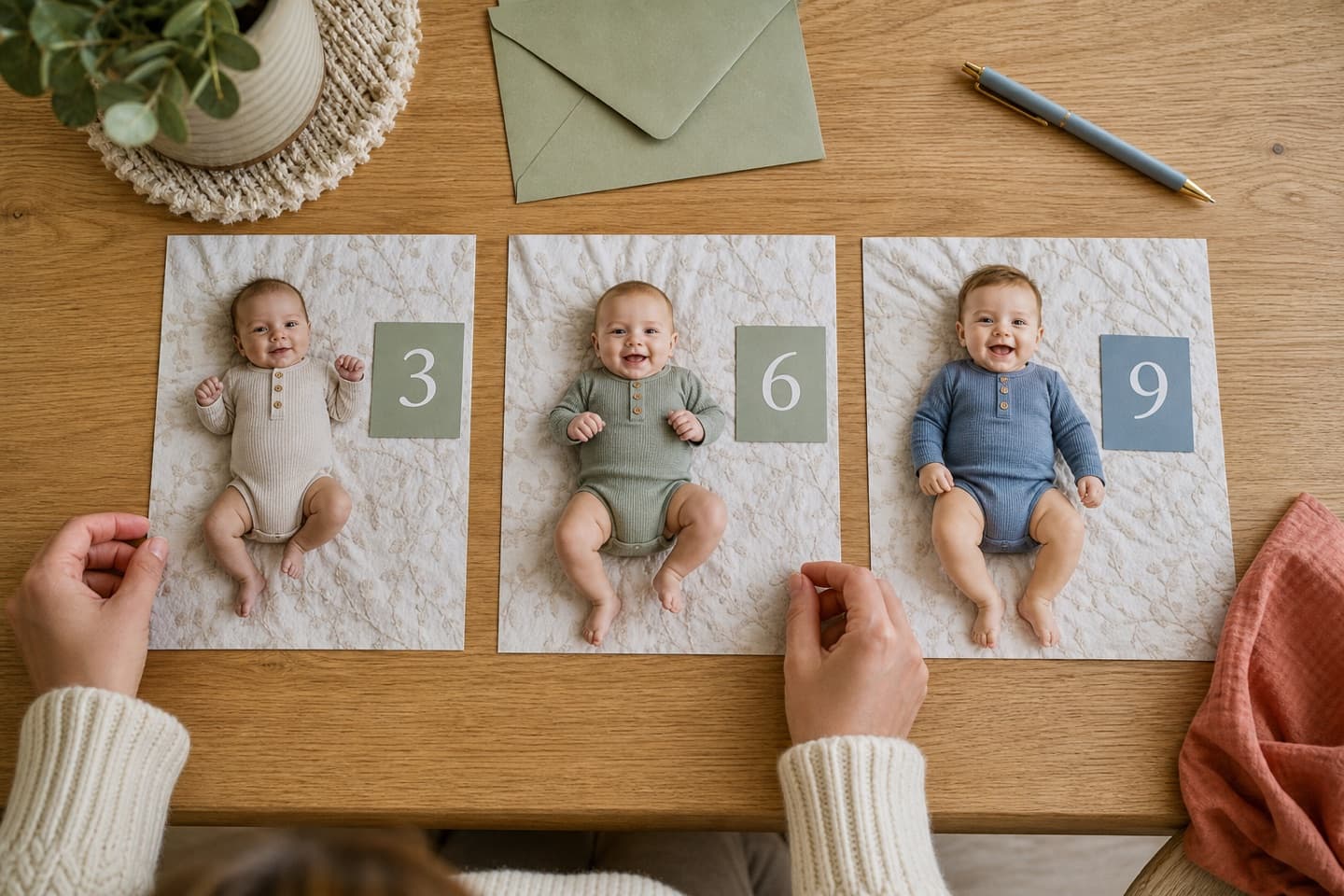
A repeated setup makes growth visible without requiring much planning. Pick:
- One safe floor blanket or rug
- One window with reliable daylight
- One camera angle
- One familiar soft toy for scale
- One set of age cards
Keep the setup loose. By later months, your baby may crawl away, turn the card over, or refuse to look toward the camera. Keep those pictures. The increasing chaos is part of the comparison.
First-Moment Cards Worth Keeping Nearby
Monthly cards record time. “First” cards record change.
Useful first-moment cards might include:
Connection and Communication
- First social smile
- First laugh
- First wave
- First clap
- First recognizable word or sign
- First time responding to a family nickname
Movement
- First roll
- First independent sit
- First crawl or other way of moving
- First time pulling up
- First time standing independently
- First steps
Food and Everyday Life
- First taste of solid food
- First tooth
- First haircut
- First trip in a stroller
- First swim
- First night in their own room, if and when that happens
Family and Belonging
- First meeting with a grandparent, sibling, or chosen-family member
- First visit to a family home
- First celebration or tradition
- First trip
- First birthday
Do not interrupt a real first to stage the card. Capture the moment with a photo or short video if you can, then take a card photo afterward or add a digital label later.

That approach gives you two useful records: the imperfect image or video where the first actually happened, and a clearer follow-up photo for the timeline or baby book.
How to Take a Milestone Card Photo in Five Minutes
The easiest setup is usually on the floor near a window.
- Choose the time. Try after sleep or food, when your baby is usually comfortable. Do not wait for a particular calendar time if the day is unraveling.
- Clear one small area. You need a blanket-sized space, not a clean house.
- Face the light. Position your baby so the window is in front or slightly to the side, rather than directly behind.
- Place the card beside them. Keep it readable without asking your baby to hold it.
- Get down to eye level. Take one horizontal photo, one vertical portrait, and one close detail.
- Keep photographing for another minute. The laugh, roll, grab, or escape after the planned picture often shows the stage best.
Clean your phone lens first. Tap your baby's face to focus, avoid digital zoom, and use burst mode or a short video when they are moving quickly.
Stop when your baby has had enough. The goal is not to win a negotiation with a six-month-old.
What to Write With a Milestone Photo
The card tells you when. Your note should tell you who your baby was then.
Add one or two sentences answering any of these:
- What made them laugh?
- What did they reach for every time?
- What sound, word, or sign did they use?
- Who did they love watching?
- What changed in the daily routine?
- What surprised you this month?
- What was difficult, funny, or tender?
- What did you call them at home?
For example:
Six months. You laughed whenever your sister sneezed, tried to grab every glass on the table, and were happiest sitting on the kitchen floor while we cooked.
That paragraph will carry more memory than height and weight alone. Include measurements if they matter to you, but save personality too.
Milestone Cards Are Not a Developmental Checklist
Photo cards often mix ages and skills, which can accidentally make development look like a sequence of deadlines. It is not.
The CDC describes developmental milestones as skills children reach in how they play, learn, speak, act, and move. Its age-based checklists describe what most children do by a certain age and are intended to support developmental monitoring. The CDC also explains that its milestone resources are not a substitute for standardized developmental screening.
Use cards to celebrate what your child is doing, whenever it happens. Do not use another baby's photo series or a printed card deck to decide whether your child is “ahead” or “behind.”
If your child has lost a skill, is not meeting one or more milestones for their age, or you have a concern, the CDC recommends talking with your child's doctor and asking about developmental screening.
The photo can still be joyful. Health questions simply deserve a better tool than social media or a milestone-card set.
What If You Miss a Month?
You are still allowed to have a baby book.
Choose the least stressful repair:
- Take the picture when you remember and label it “around seven months.”
- Use a candid photo already taken near the date.
- Combine two months on one future book page.
- Skip the age card and write a short monthly note instead.
- Start again with the current month without filling the gap.
Do not change the date to make the series look perfect. Approximate honestly and keep moving.
If you are several months behind, search your camera roll by month and choose one picture from each stage. The system in How to Organize Baby Photos Without Falling Behind can help you find favorites without sorting every image first.
Use Milestone Cards Safely
Milestone cards are photo props, not baby toys.
- Place your baby on the floor or another age-appropriate safe surface.
- Keep an adult within reach throughout the photo.
- Put the card beside your baby rather than asking them to mouth or hold it.
- Remove the card as soon as the picture is finished.
- Check wooden discs for splinters, cracks, or detachable decorations.
- Avoid cards with beads, clips, pins, magnets, loose ribbon, or other small pieces.
- Keep cords, string lights, heavy backdrops, and unstable stands away from the setup.
The U.S. Consumer Product Safety Commission's small-parts guidance explains why small objects can create choking, aspiration, or ingestion hazards for children under three. A flat paper card may look harmless, but babies explore with their mouths. Supervision and a quick photo are safer than leaving any prop within reach.
Physical Cards, Digital Cards, or Both?
There is no need to choose one format forever.
| Option | Works well when | Watch for |
| Physical cards | You enjoy a consistent visual series and tangible keepsakes | Storage, glare, and having the correct card nearby |
| Wooden discs | You want a reusable, durable marker | Splinters, detachable pieces, and legibility |
| Letterboard | You want custom phrases | Loose letters and the time required to arrange them |
| Digital labels | The moment already happened or the physical card is missing | Keep the original unedited photo too |
| No card | You prefer candid photos and written notes | Add dates and context somewhere searchable |
A useful hybrid is to use physical cards for planned monthly photos and digital notes for spontaneous firsts. That preserves the visual pattern without forcing a real moment to wait for a prop.
Save the Story Beyond the Card
A milestone picture can easily disappear into the same camera roll as screenshots, receipts, and fifteen near-identical photos from breakfast. Give the best image a second home while the details are fresh.
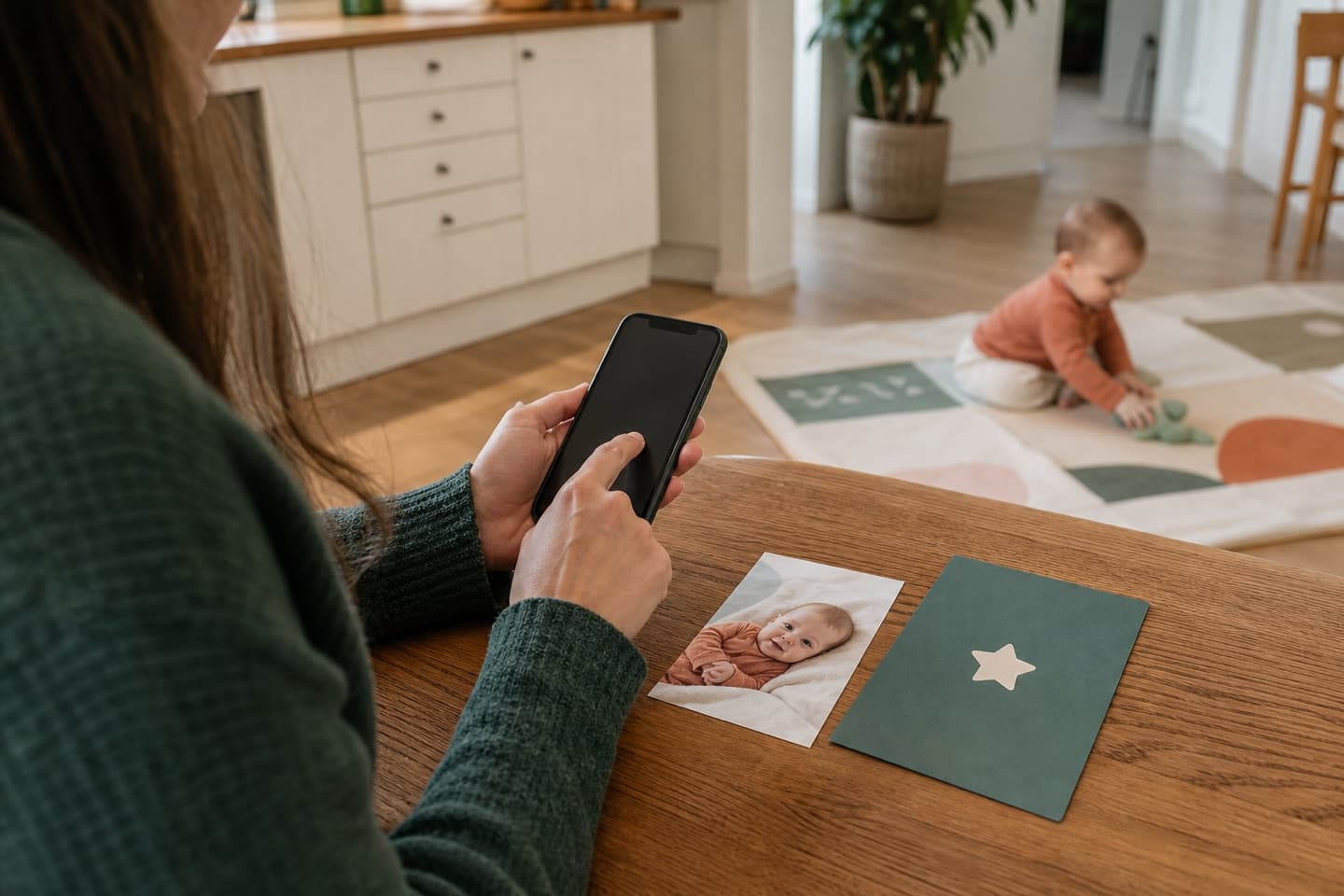
In Magic Baby Books, you can save the milestone as a moment in your child's private timeline with the date, photos or videos, and a short story. You can capture, organize, share, and create a keepsake book entirely on your phone. The web app offers the same core functionality and can be more comfortable when reviewing a large photo library or working on a bigger screen.
You can also share selected moments with invited family. Viewers can follow, react, and comment; contributors can add moments of their own. That means a grandparent's photo or story does not have to remain stranded in a separate chat thread.
The practical habit is small:
- Take the milestone photo or video.
- Choose the one image that best shows the moment.
- Save it with the real date.
- Add one sentence of context.
- Share it privately with family if you choose.
Capture once. Share with family. Create books later.
Turn Milestone Photos Into a First-Year Book
A milestone book does not need one identical page for every month. A more interesting rhythm combines the planned card photo with real family life.
Try this structure:
| Page or spread | What to include |
| Opening | Newborn portrait, birth details, and a note about meeting your baby |
| Months 1-3 | Three monthly card photos plus one story from the newborn season |
| Months 4-6 | Monthly comparison, favorite toy, first laugh, and a family photo |
| Months 7-9 | Movement, expressions, food, and an everyday routine |
| Months 10-11 | Favorite things, sounds, relationships, and current way of exploring |
| First birthday | Portrait, family, celebration details, and what your baby was like at one |
| Closing | A letter about the first year and hopes for the next |
For birthday-page inspiration, use the practical shot list in First Birthday Picture Ideas: 12 Photos You Will Be Glad You Took.
Intersperse card photos with close-ups, videos you can reference with a still, notes from relatives, and ordinary scenes. The card provides structure; the everyday images provide the life around it.
Frequently Asked Questions
When should I start using baby milestone cards?
Start whenever you want. Some sets begin with pregnancy or a birth announcement, while others begin at one week or one month. Starting at four or eight months is still starting. You do not need to recreate earlier photos unless doing so feels enjoyable.
What size should baby milestone cards be?
Choose a size that remains readable in the final photo without covering your baby. Postcard-sized cards often work for close floor photos; larger cards or discs may suit wider sitting and standing photos. Test one with your phone before committing to a full set.
Are wooden or paper milestone cards better?
Paper cards are light, easy to store, and often less reflective. Wooden discs are durable and reusable but should be checked for rough edges, cracks, and detachable decorations. Whichever you use, treat it as a supervised prop and remove it after the photo.
How do I take milestone pictures when my baby will not stay still?
Place the card beside the action instead of trying to pose your baby. Use burst mode or record a short video, then take a clear card photo separately if necessary. A crawling-away picture may describe the month better than a still portrait.
What should I do with the milestone cards after the first year?
Write dates on the backs and store them with other keepsakes, place selected cards in a scrapbook, photograph or scan them, pass reusable discs to another family, or use them as section markers in a first-year memory box.
Can I make milestone photos without buying cards?
Yes. Use a handwritten card, a reusable board kept out of reach, a digital label, or no marker at all. A dated photo plus one honest sentence preserves the memory just as well.
The Card Is Only the Beginning
Baby milestone cards are useful because they make change visible. But the part your family will want later is not the typography. It is the baby who tried to eat the card, the grandparent behind the camera, the toy that appeared in every picture, and the sentence that brings the stage back.
Take the photo you can take. Write one detail. Keep the real date. Then return to your baby instead of turning the memory into a production.